In our increasingly eco-conscious world, reusable water bottles have become an indispensable accessory for daily life. From the gym to the office, school, and outdoor adventures, they offer a sustainable alternative to single-use plastics. Whether your preference is sleek stainless steel or lightweight aluminum, these durable vessels are designed to accompany you everywhere. However, an often-overlooked aspect of owning an eco-friendly water bottle is its regular and proper cleaning. This comprehensive guide will reveal a simple yet highly effective non-toxic method to ensure your reusable water bottles remain sparkling clean, free from harmful bacteria, and completely odor-free. Embrace this essential water bottle cleaning hack to protect your health and extend the life of your favorite hydration companion.
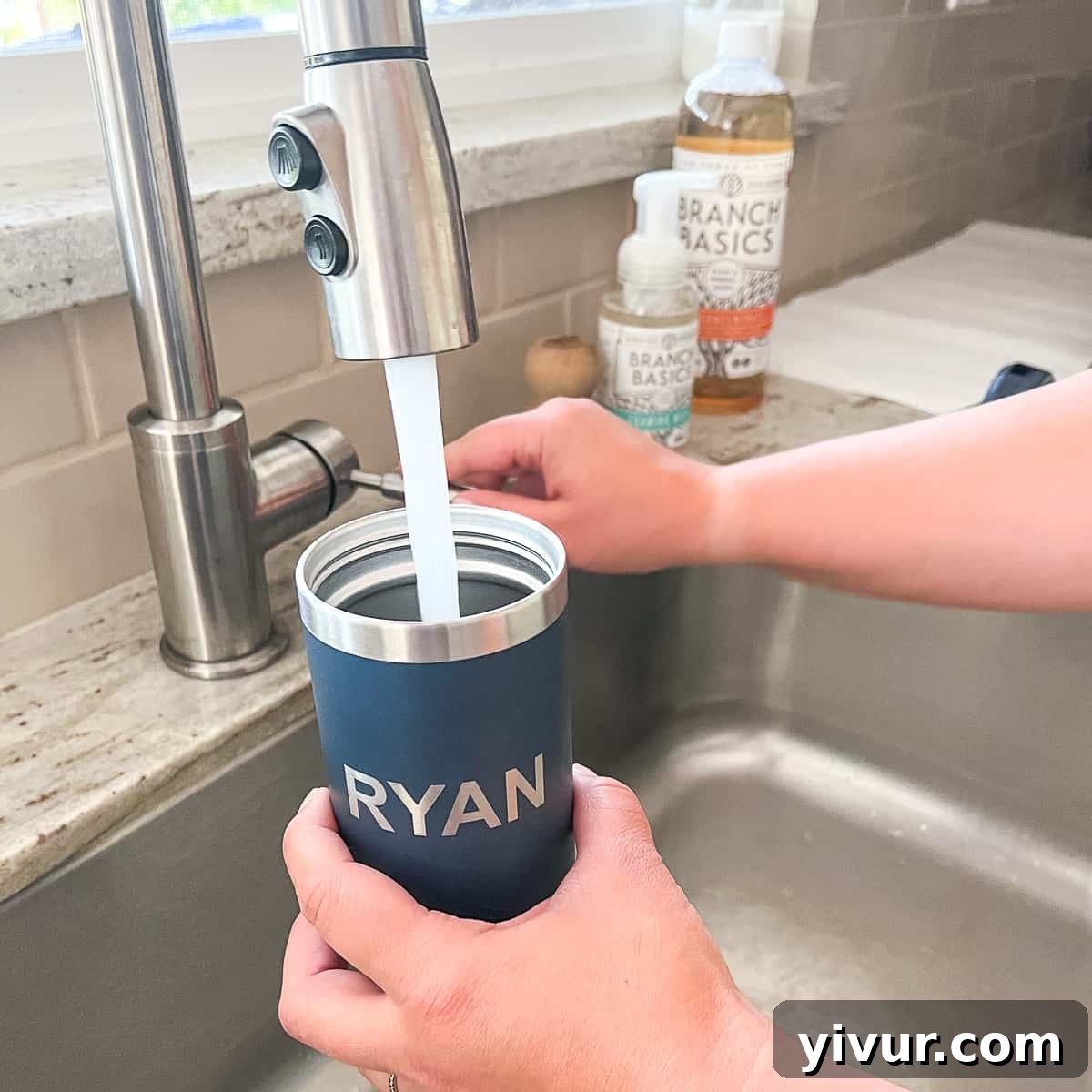
This post is proudly sponsored by Branch Basics, a brand committed to non-toxic cleaning solutions.
The Unseen Truth: Why Cleaning Your Reusable Water Bottles Is Crucial for Health and Hygiene
How often do you pause to consider the cleanliness of your trusty water bottle? For many of us, these containers are a constant presence, used throughout the day. While they might appear clean, the reality is that every sip transfers bacteria from your mouth directly into the bottle. These microorganisms, particularly those that thrive in moist environments, can quickly multiply within the dark, damp interior of your water bottle, creating an invisible ecosystem of potential pathogens. This makes regular cleaning not just a suggestion, but an absolute necessity for maintaining good health and preventing the buildup of unpleasant odors.
The importance of a clean bottle intensifies significantly when it comes to children. Kids are often less meticulous with their eating and drinking habits, leading to food particles, sugary drink residues, and other debris finding their way into their water bottles. As a parent, I’ve lost count of the times I’ve gone to refill my kids’ stainless steel bottles only to discover remnants of lunch trapped in the straw or clinging to the inside walls. These organic materials provide an ideal breeding ground for bacteria and mold, posing a serious health risk to little ones.
Establishing a consistent cleaning routine – for instance, once a week for daily users – is the key to keeping all your reusable water bottles, whether stainless steel or aluminum, pristine and odor-free. With the back-to-school season approaching, it’s especially vital to give any bottles that have been sitting unused over the summer a thorough, deep clean. This simple practice ensures fresh-tasting water and contributes significantly to overall well-being.
Visual Guide: How to Effectively Clean Reusable Water Bottles
For a dynamic, visual demonstration of the cleaning process, you can watch this informative video on YouTube. It provides a clear, step-by-step walkthrough to ensure you master this essential cleaning routine.

Selecting Your Ideal Hydration Companion: Our Top Picks for Reusable Bottles
When it comes to choosing a reusable water bottle that stands the test of time, Yeti has consistently proven to be a top contender in our household. Their robust design and excellent insulation make them a favorite. Personally, I’m a big fan of the 18-ounce Rambler, especially when paired with the convenient Rambler Bottle Straw Cap. I find drinking from a straw much more comfortable, and the 18-ounce size is perfectly suited for most car cupholders, making it ideal for on-the-go hydration.
For my three active young boys, the Yeti Rambler Jr 12-ounce Kids Bottle is simply unbeatable for both school and home use. After experimenting with countless kids’ stainless steel bottles on the market, the Yeti has emerged as my unequivocal favorite. A significant advantage is its hard straw, which prevents my kids from chewing through it, a common issue I’ve encountered with other bottles featuring softer silicone straws. Furthermore, it boasts a completely leakproof design when closed, offering peace of mind, though it’s important to note it can leak if left open. Its compact size fits neatly into school backpacks, and the option to personalize it with their names is a delightful bonus.
While Yeti is our family’s preferred brand, many individuals also find great success with aluminum water bottles, which offer a lightweight and durable alternative. The effective cleaning methods detailed in this guide are universally applicable and will work wonders for both stainless steel and aluminum bottles, ensuring all your eco-friendly choices remain hygienically clean.
Embracing a Non-Toxic Approach to Bottle Cleaning with Branch Basics
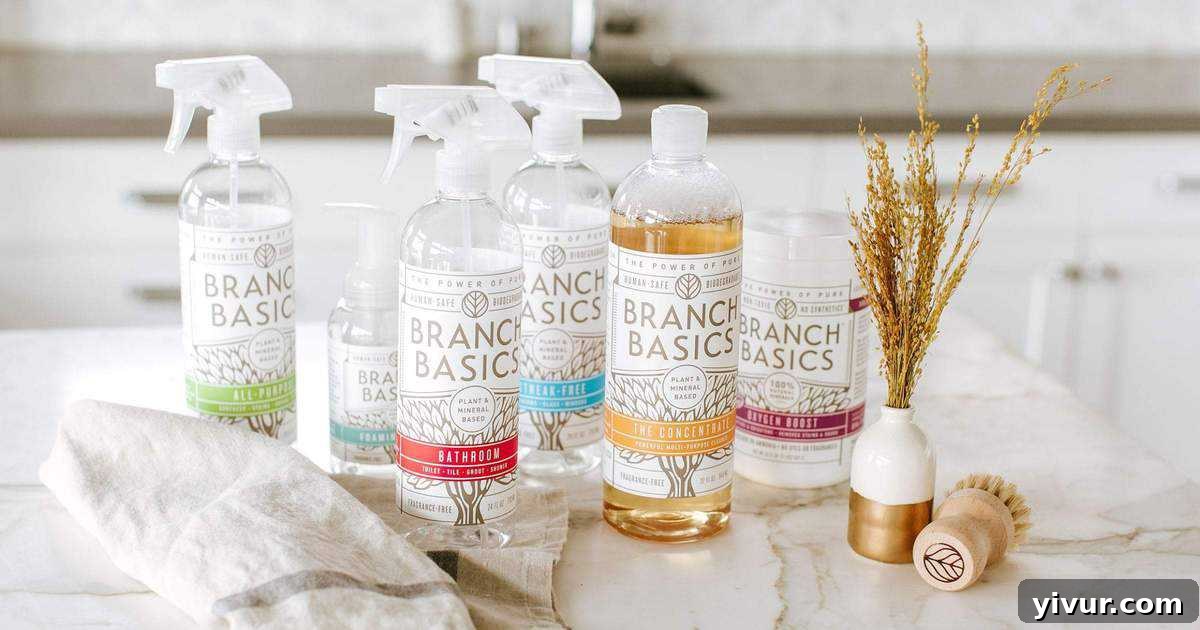
Over the years, I’ve consistently championed my profound admiration for Branch Basics, and with good reason. (Don’t forget to use code TASTESLOVELY for 15% off any starter kit!). It’s not just the best non-toxic cleaner I’ve ever used; it’s simply the best cleaner, full stop. Therefore, it comes as no surprise that Branch Basics is once again the perfect solution for maintaining the pristine condition of our family’s stainless steel water bottles. Its efficacy, combined with its commitment to health, makes it an unparalleled choice for cleaning items we regularly use for hydration.
What sets Branch Basics apart is its formulation: entirely plant and mineral-based. This means you won’t find any harmful, harsh, or synthetic chemicals in their products. This purity provides immense peace of mind, allowing me to feel completely safe using it on the eco-friendly water bottles that we drink from constantly. Knowing that no toxic residues will be left behind, nor will any harmful fumes be inhaled, is incredibly reassuring. For this particular water bottle cleaning hack, I specifically utilize their versatile Foaming Wash. Its gentle yet powerful cleaning action works perfectly, effectively breaking down grime and eliminating bacteria without compromising the integrity or safety of the bottles.
Your Step-by-Step Guide to a Spotless Stainless Steel Bottle
Achieving a naturally clean stainless steel or aluminum water bottle, free from any harsh or harmful chemicals, is remarkably straightforward. The most significant benefit of this method is keeping toxic cleaning chemicals out of your water bottle, and consequently, out of the water you drink from it. This ensures that every sip you take is pure and untainted, safeguarding your health while promoting environmental responsibility.
10 Simple Steps To Clean Your Eco-Friendly Water Bottles Effectively
1. Gather Your Essential Supplies.
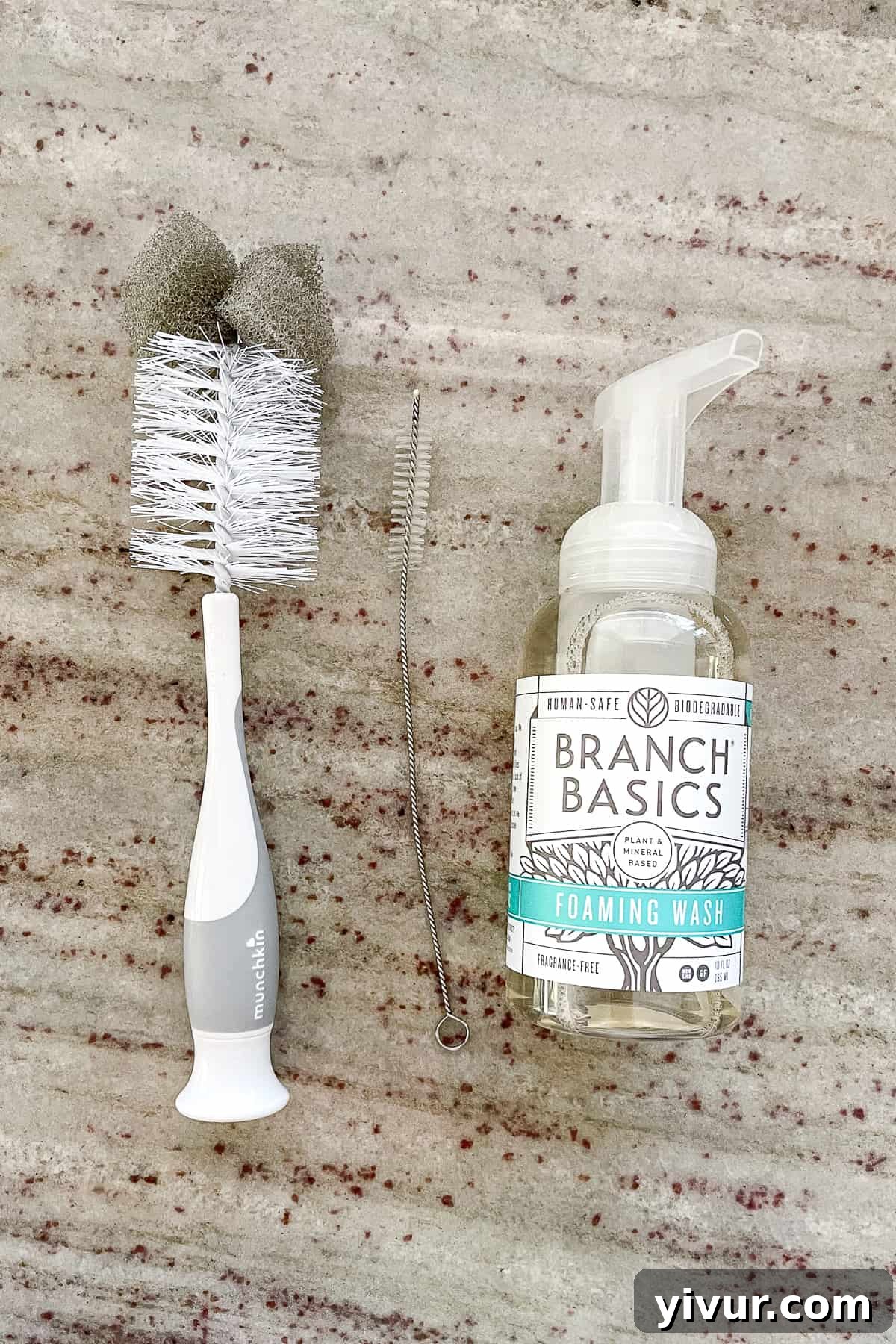
Before you begin your deep clean, make sure you have all the necessary tools at hand. These specialized items will ensure every nook and cranny of your bottle is thoroughly addressed, leading to a truly hygienic result:
- Bristle Bottle Brush: Essential for reaching the bottom and sides of the bottle.
- Straw Cleaner Brush: Specifically designed to clean narrow straws, where grime often hides.
- Branch Basics Foaming Wash: Your non-toxic, plant-based cleaning solution.
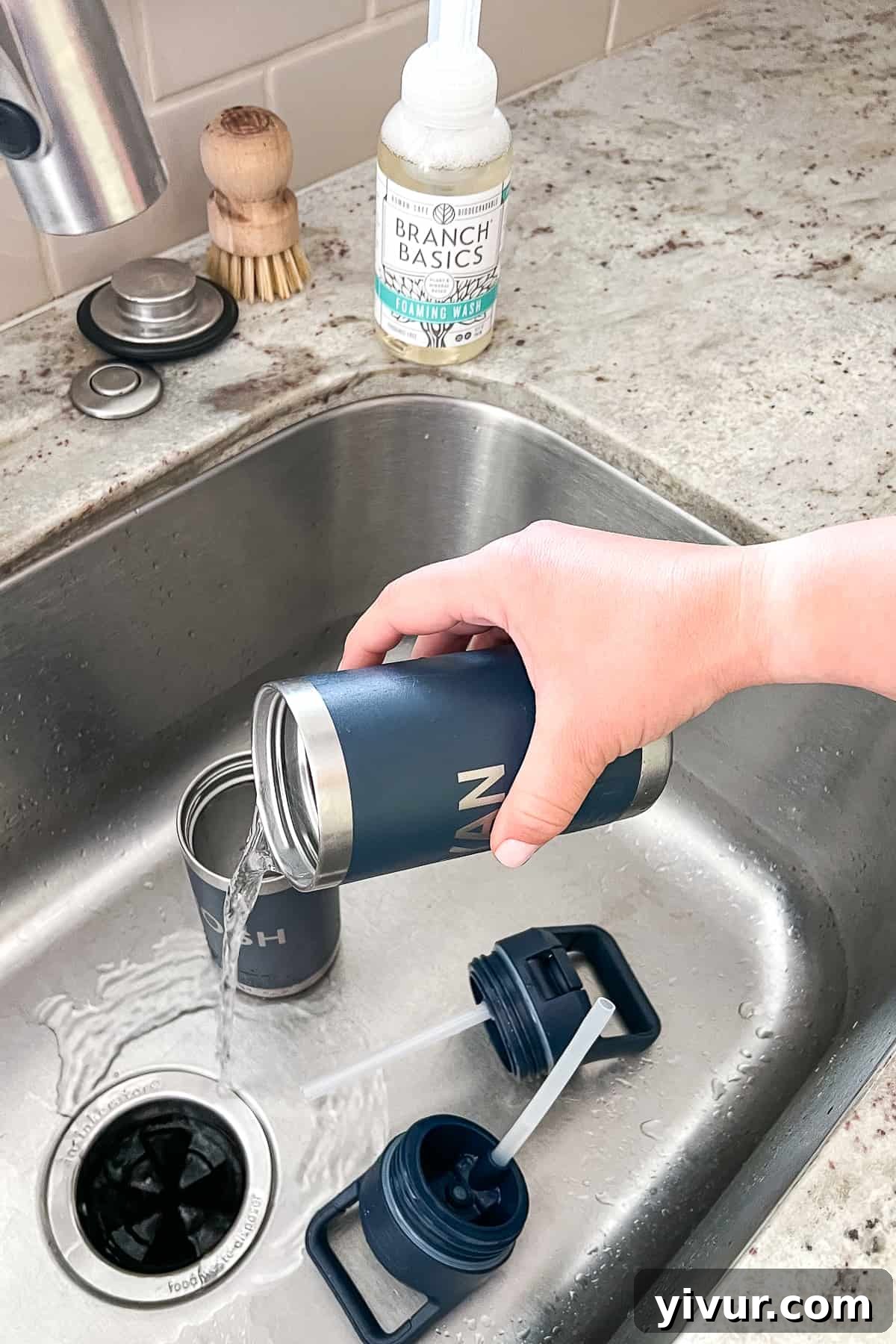
2. Empty the Water Bottles Completely.
Begin by ensuring your water bottle is completely empty. If there’s any remaining water, juice, or other liquid, pour it out. This initial step prevents diluting your cleaning solution and allows for a more effective scrub. Also, remove any large food particles or debris that might be present before wetting the bottle.
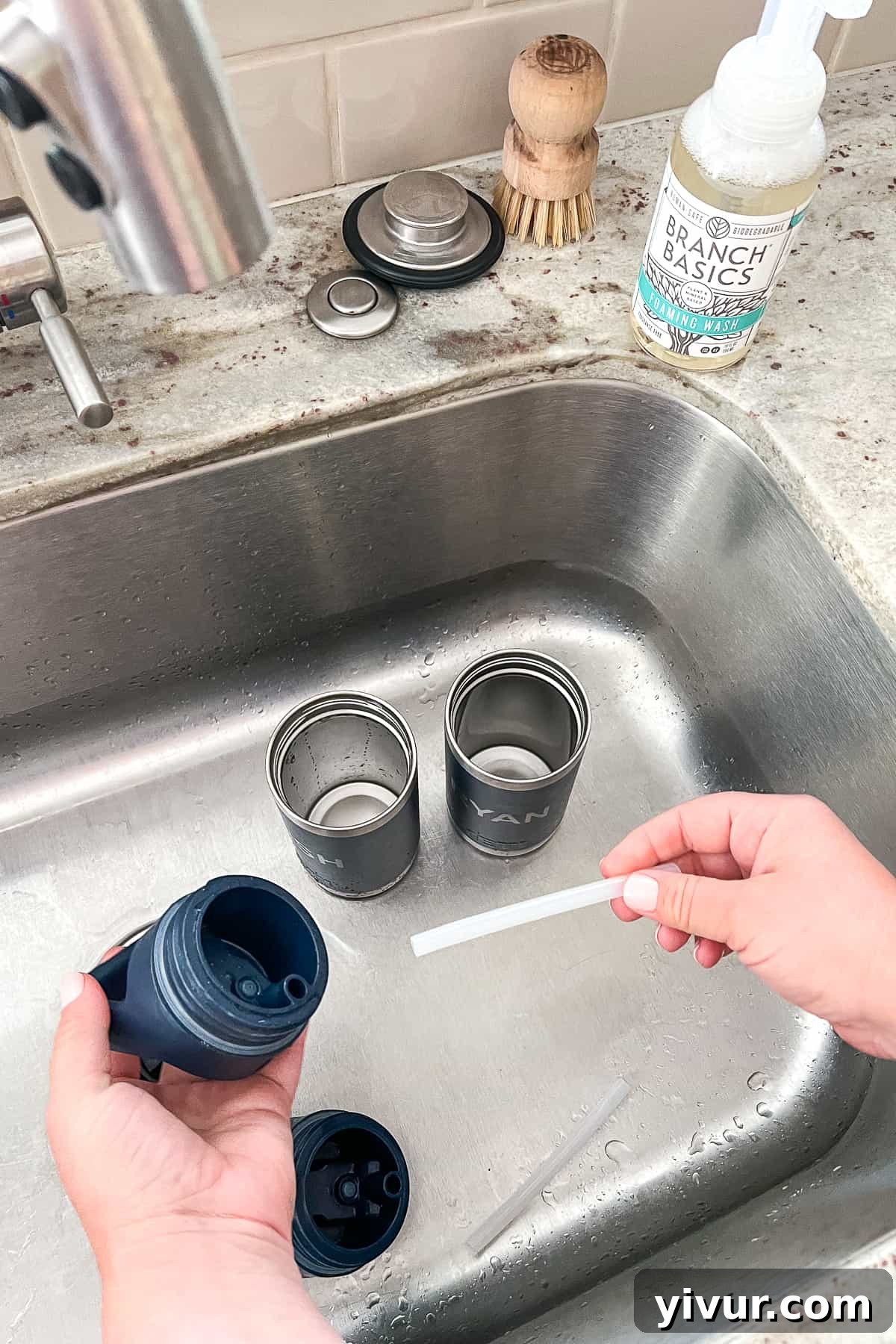
3. Disassemble All Components Thoroughly.
This is a critical step for a truly deep clean. Pull apart every removable piece of your stainless steel or aluminum water bottle. This includes the main body, the lid, any gaskets, and the straw assembly. Many lids have intricate nooks and crannies where bacteria can accumulate unnoticed, so disassembling allows you to reach and clean all surfaces effectively.
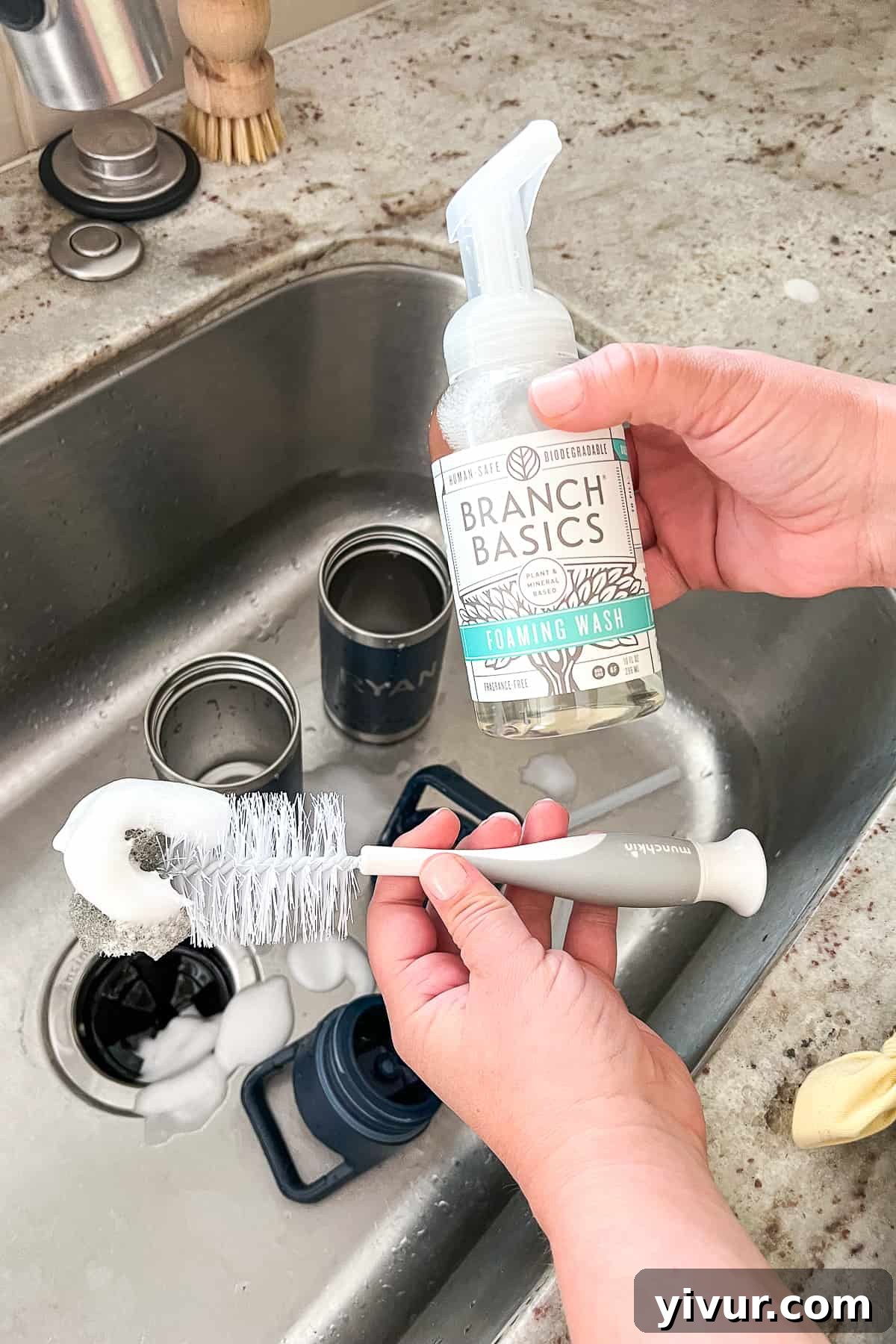
4. Prepare Your Bottle Brush with Branch Basics Foaming Wash.
Start by wetting your bottle brush under cool running water. Then, apply approximately three pumps of the Branch Basics Foaming Wash directly onto the bristles. The foaming action of this cleaner helps to lift and encapsulate dirt and grime, making it easier to scrub away.
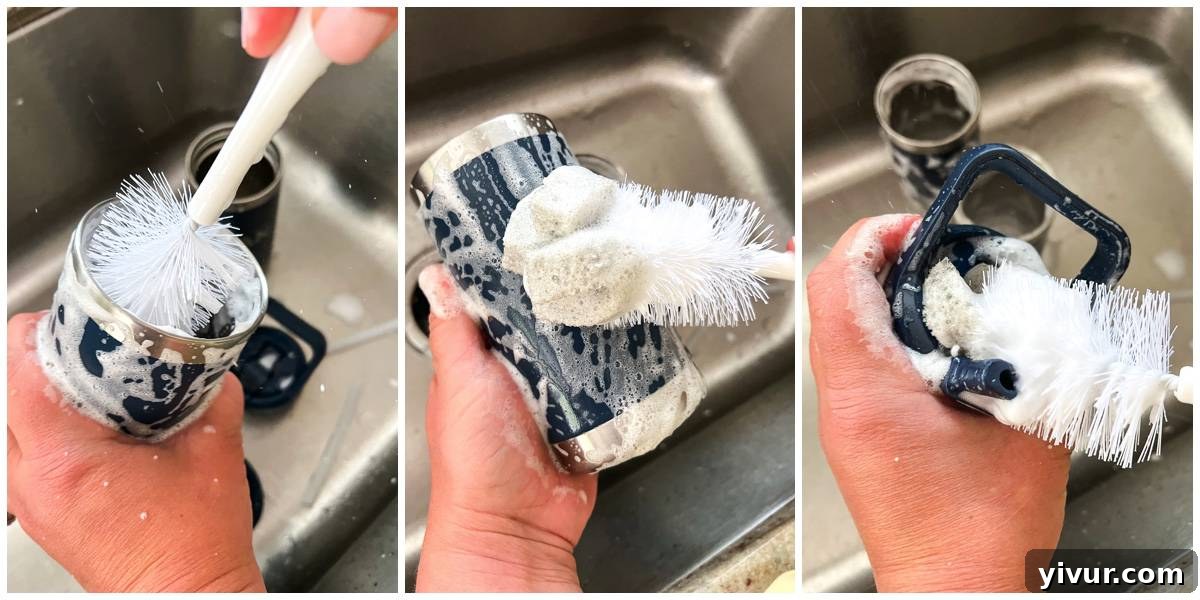
5. Thoroughly Scrub the Water Bottle and Lid.
Using your soapy bottle brush, meticulously scrub the entire interior and exterior of the main bottle. Pay special attention to the rim, threads where the lid screws on, and any textured areas that might trap dirt. Don’t forget to scrub the inside and outside of the lid as well, ensuring you reach all the contours and crevices where residue can accumulate.
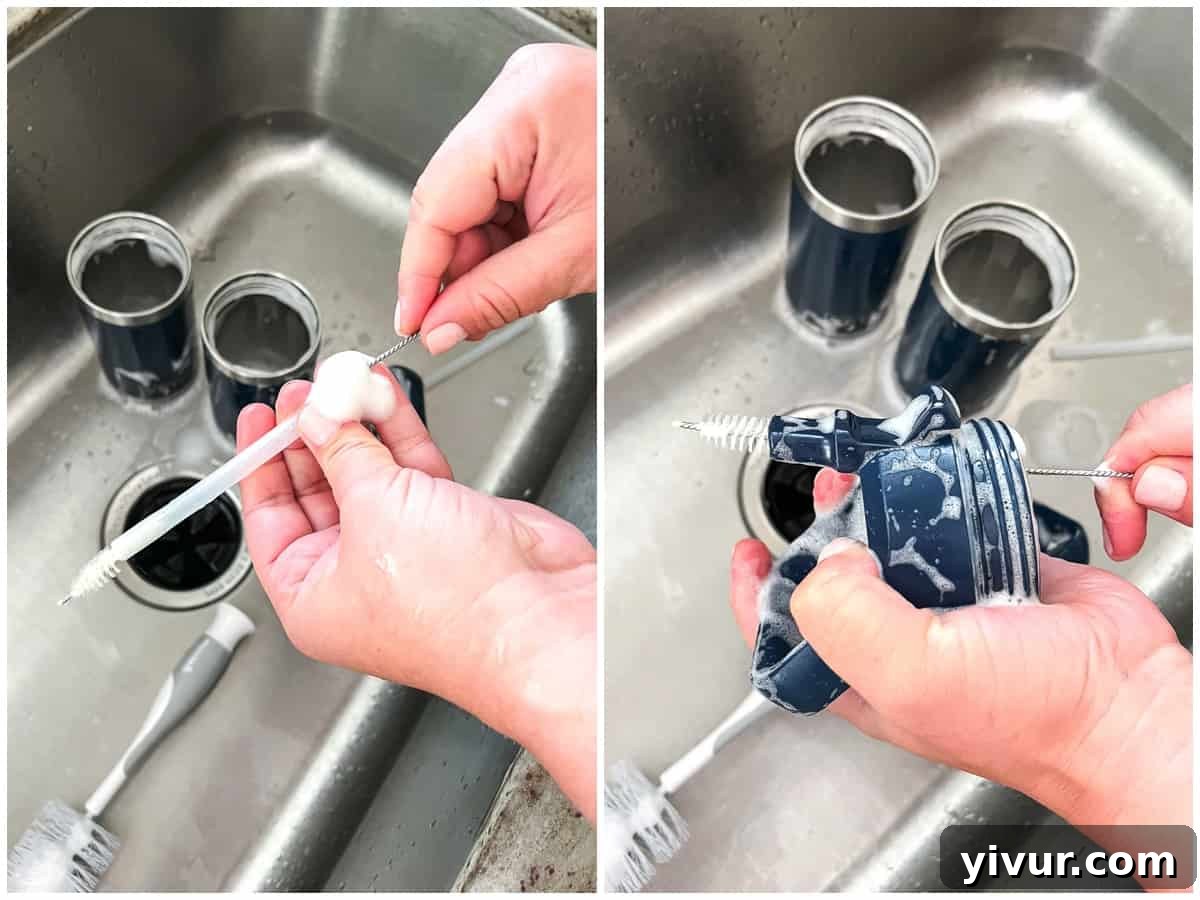
6. Give Special Attention to Cleaning the Straw.
Straws are notorious for trapping bacteria and mold due to their narrow, enclosed design. Add one pump of Branch Basics Foaming Wash to your straw cleaner brush. Carefully push the brush through the entire length of the straw multiple times, ensuring you dislodge any hidden debris. Also, use the straw brush to clean any small openings or straw-related components within the lid. This diligent step guarantees a truly clean bottle *and* a clean straw, vital for hygienic drinking.
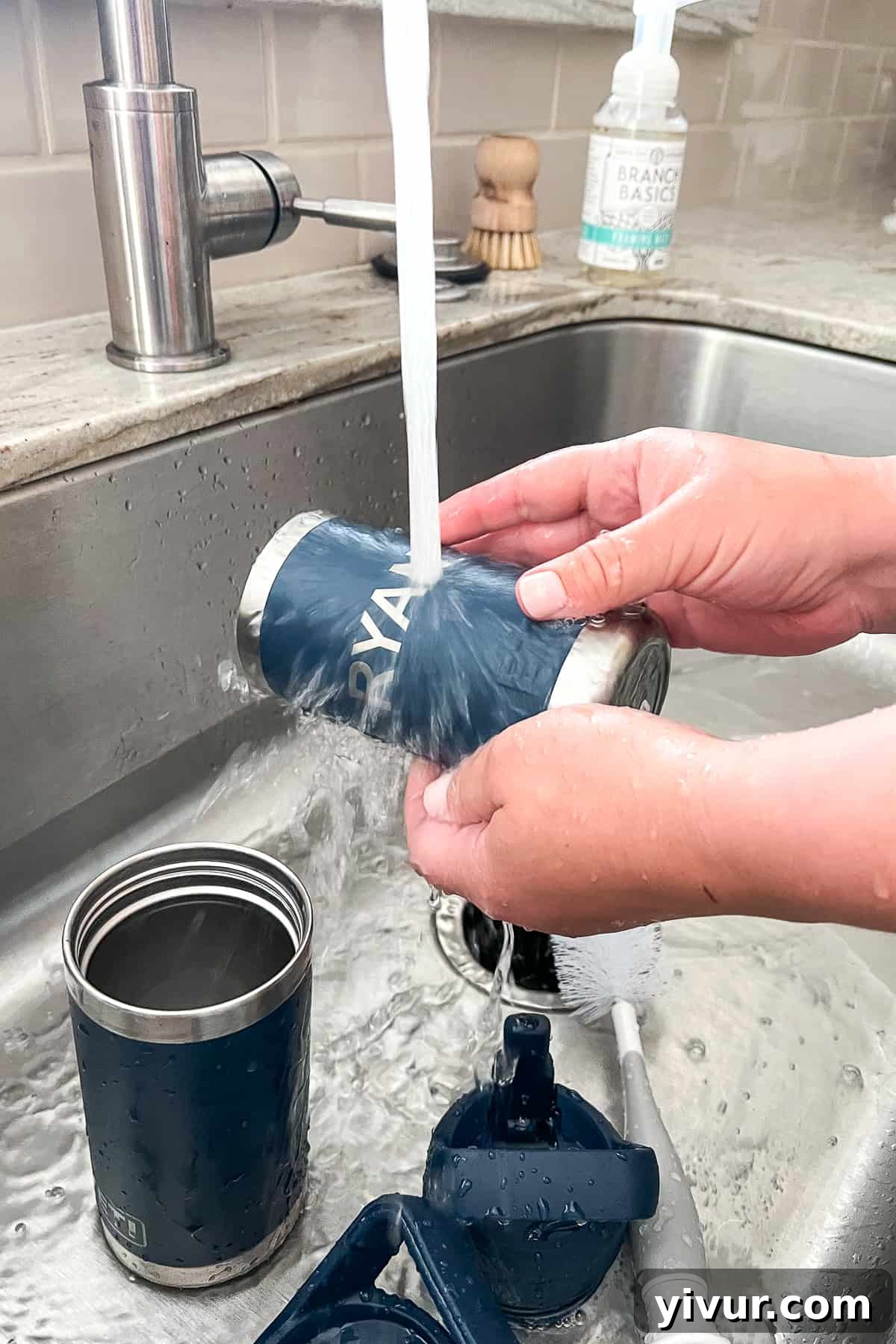
7. Rinse All Components Thoroughly.
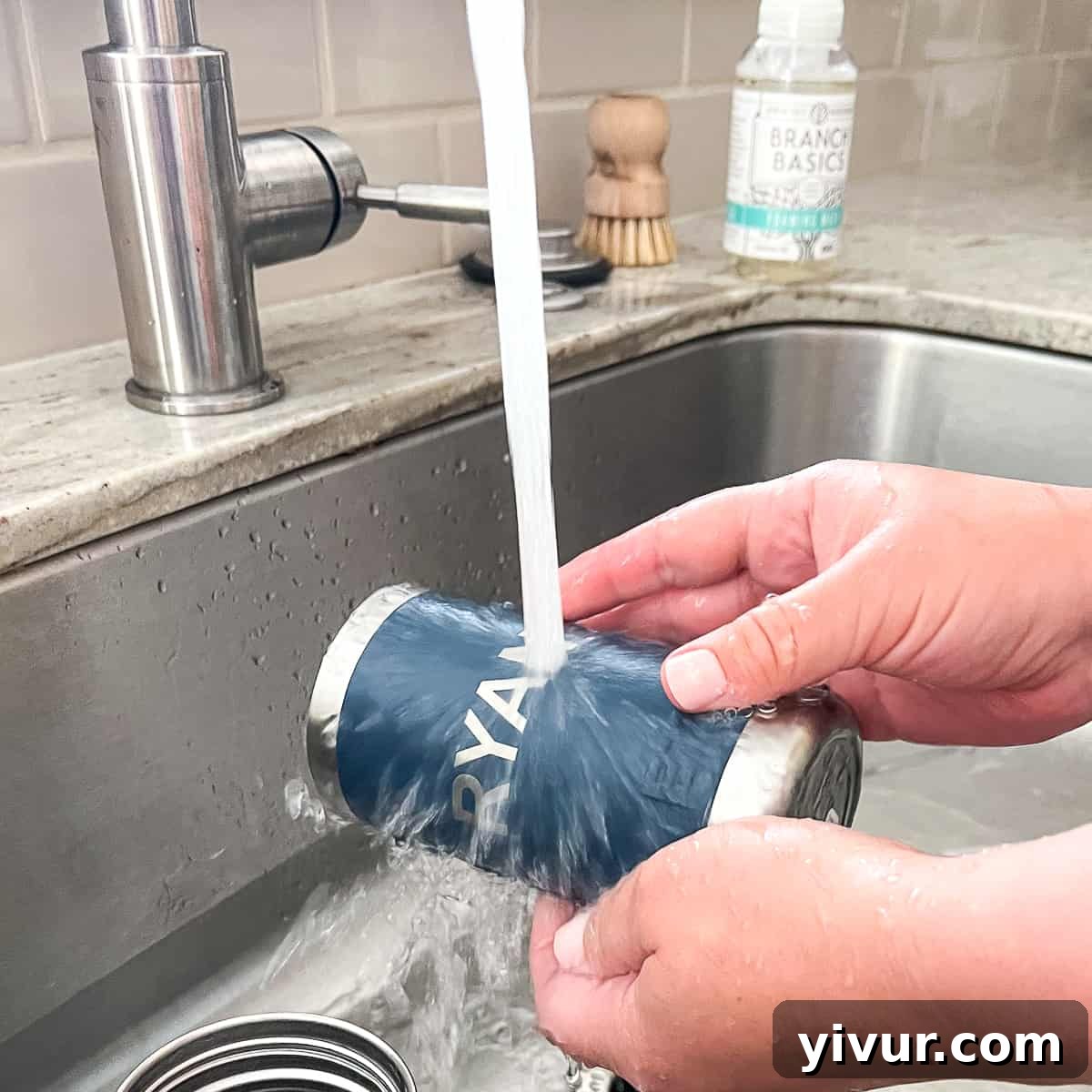
Once you’ve completed the scrubbing phase of your water bottle cleaning, it’s time for a thorough rinse. Hold each component under running water, ideally warm to hot, ensuring that all soap suds and cleaning solution are completely washed away. Inspect each piece carefully to confirm no residue remains, as lingering soap can affect the taste of your water or attract more bacteria.
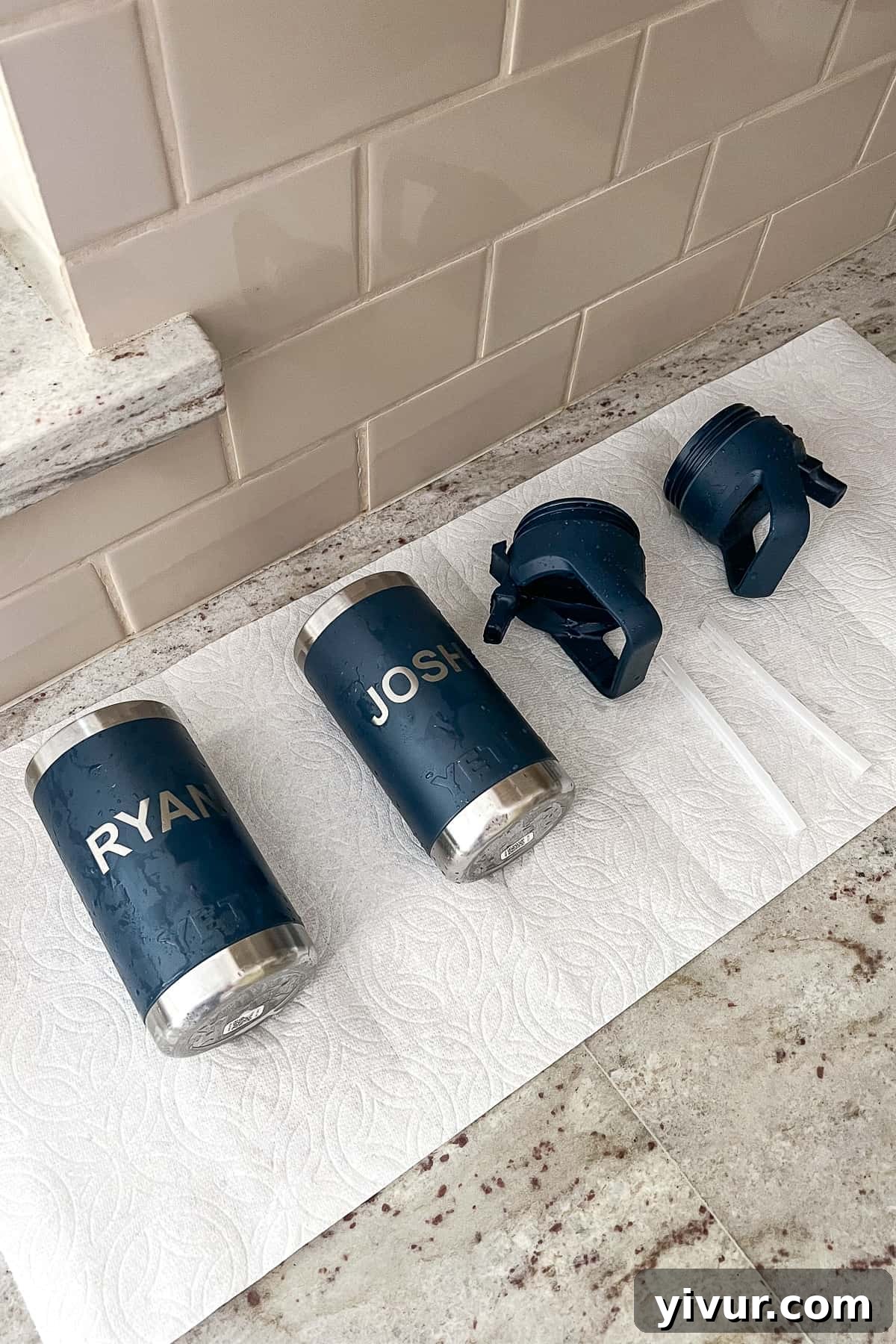
8. Allow for Complete Air Drying.
This is arguably one of the most crucial steps for preventing bacterial growth and foul odors. After rinsing, place all your eco-friendly water bottle components on a drying rack or a clean towel, allowing them to air dry for several hours, or even better, overnight. Position them upside down or in a way that allows maximum air circulation, especially for the bottle’s interior and the intricate parts of the lid and straw. Complete air drying ensures that any residual moisture, which bacteria adore, evaporates entirely, effectively preventing the growth of microorganisms and the development of musty smells.
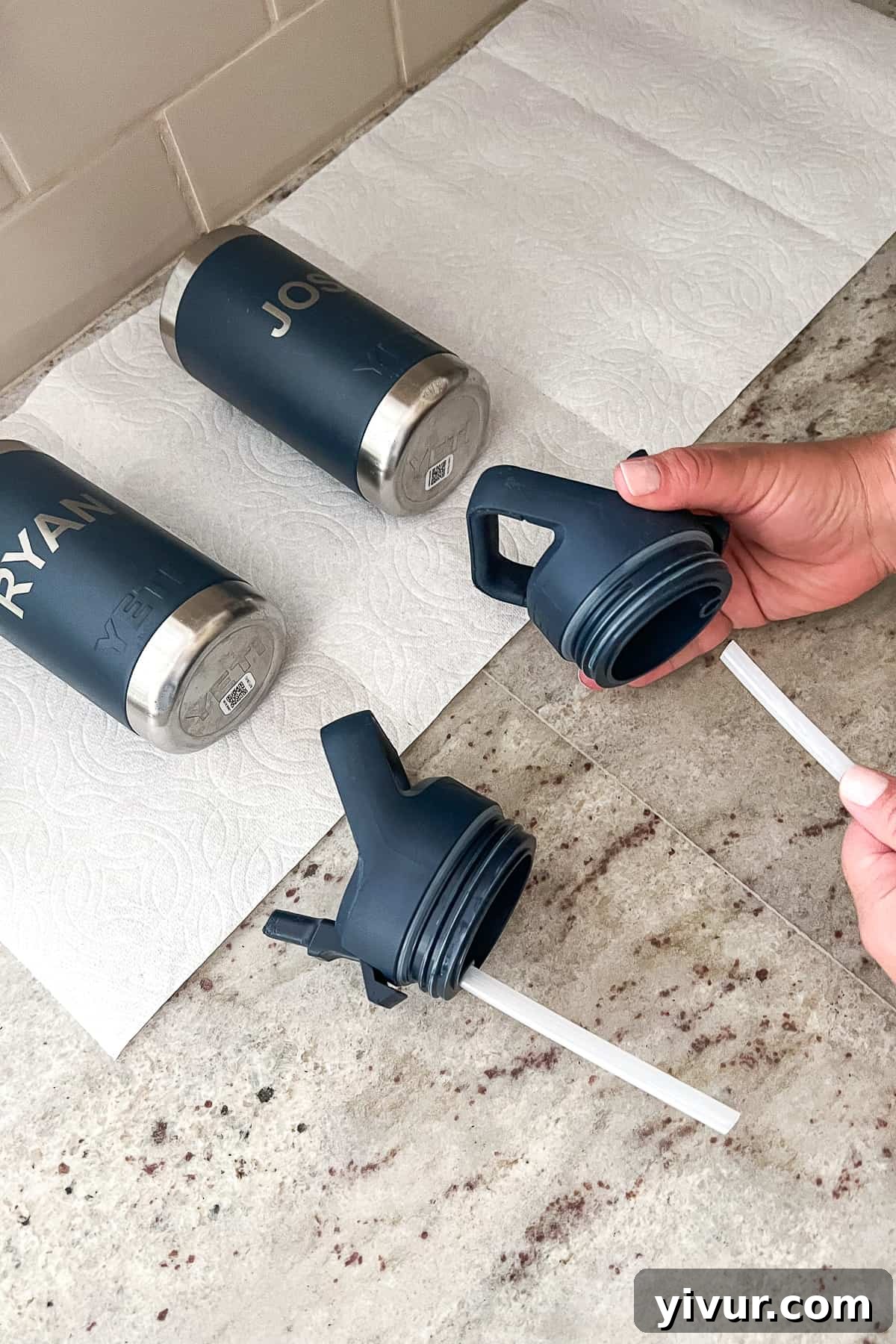
9. Reassemble Your Perfectly Clean Bottle.
Once you are absolutely certain that all components of your water bottle are completely dry to the touch, it’s time to reassemble them. Carefully put the lid, straw, and any other parts back together. Handling dry components helps prevent reintroducing moisture or contaminants.
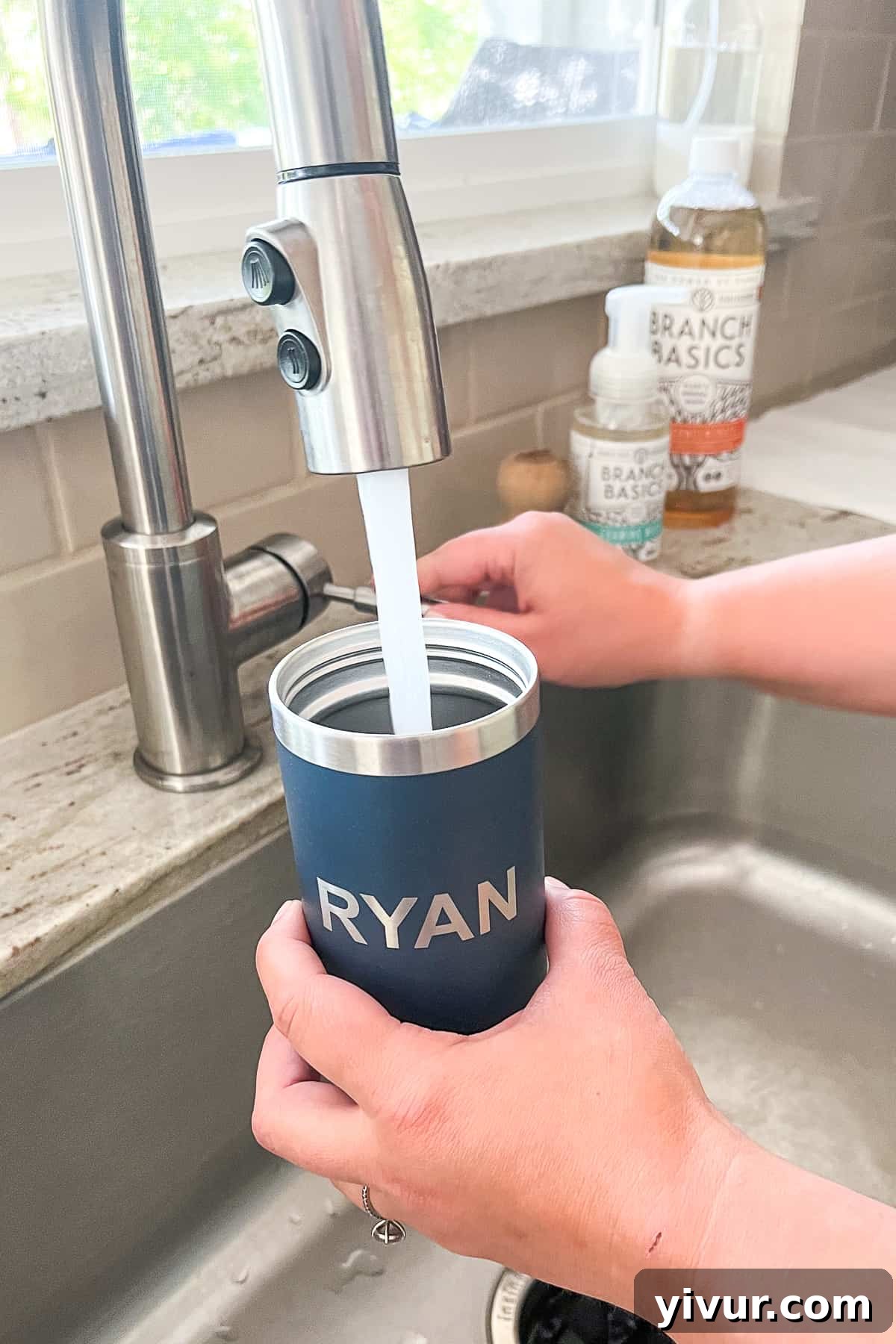
10. Refill with Fresh Water and Enjoy!
Congratulations! You now have a hygienically clean, odor-free water bottle that’s ready for fresh water. Refill it and enjoy pure, untainted hydration. Make it a habit to repeat this comprehensive water bottle cleaning process approximately once a week, or immediately if you ever detect any unpleasant smells, notice visible grime, or if the bottle has contained anything other than plain water.
Frequently Asked Questions About Keeping Your Bottle Clean
The frequency of cleaning largely depends on your usage patterns. For bottles used daily, especially if they contain anything other than plain water (like flavored drinks, protein shakes, or even just tap water that sits for a while), a weekly deep clean is highly recommended. If you’re a heavy user or notice any off-flavors or smells, don’t hesitate to clean it more often. In our household, where bottles are constantly in use, once a week has proven to be the ideal schedule for maintaining optimal hygiene.
Yes, absolutely! I’m thrilled to share a special offer with you: use the code TASTESLOVELY to receive 15% off any Branch Basics starter kit. If you’d like to delve deeper into my personal experience and detailed assessment of their exceptional product line, you can read my comprehensive honest review here. It provides more in-depth information about why I trust and recommend Branch Basics for a truly non-toxic home.
Sometimes, yes! While I have a good understanding of the daily wear and tear my own stainless steel bottle endures, children’s bottles often experience unique challenges. They can be left in various places, contain more varied liquids, and are prone to accumulating food particles. For my kids’ water bottles for school, I make it a point to check them daily as soon as they return home. If they appear even slightly dirty, have an odor, or if I know they’ve been used for something sticky, I immediately perform the full cleaning steps outlined above. I then let them air dry overnight, ensuring their school water bottles are impeccably clean and ready for the next day’s adventures. This proactive approach helps prevent any bacterial buildup and keeps them healthy.
While many stainless steel and aluminum bottles are marketed as “dishwasher safe,” it’s often better to hand wash them using the method described above. High heat from dishwashers can sometimes degrade seals, gaskets, or painted exteriors over time. More importantly, dishwashers might not effectively reach all the tight spots in lids and straws, where bacteria love to hide. Hand washing with a bottle brush and straw cleaner ensures a more thorough and precise clean, especially for hard-to-reach areas.
If your bottle retains an odor after following all the cleaning steps, it usually points to lingering bacterial growth or mold in areas that weren’t fully cleaned or dried. Re-disassemble all parts and pay extra attention to rubber gaskets, lid crevices, and the very end of the straw that goes into your mouth. You can try soaking these stubborn parts in a solution of warm water and Branch Basics Foaming Wash for 30 minutes before scrubbing again. Ensuring complete air drying, often overnight, is crucial to prevent odors from returning. If the smell persists, it might indicate that a component, like a worn-out gasket, needs replacement.
A heartfelt thank you to Branch Basics for their generous sponsorship of this insightful post, enabling us to share valuable non-toxic cleaning wisdom!