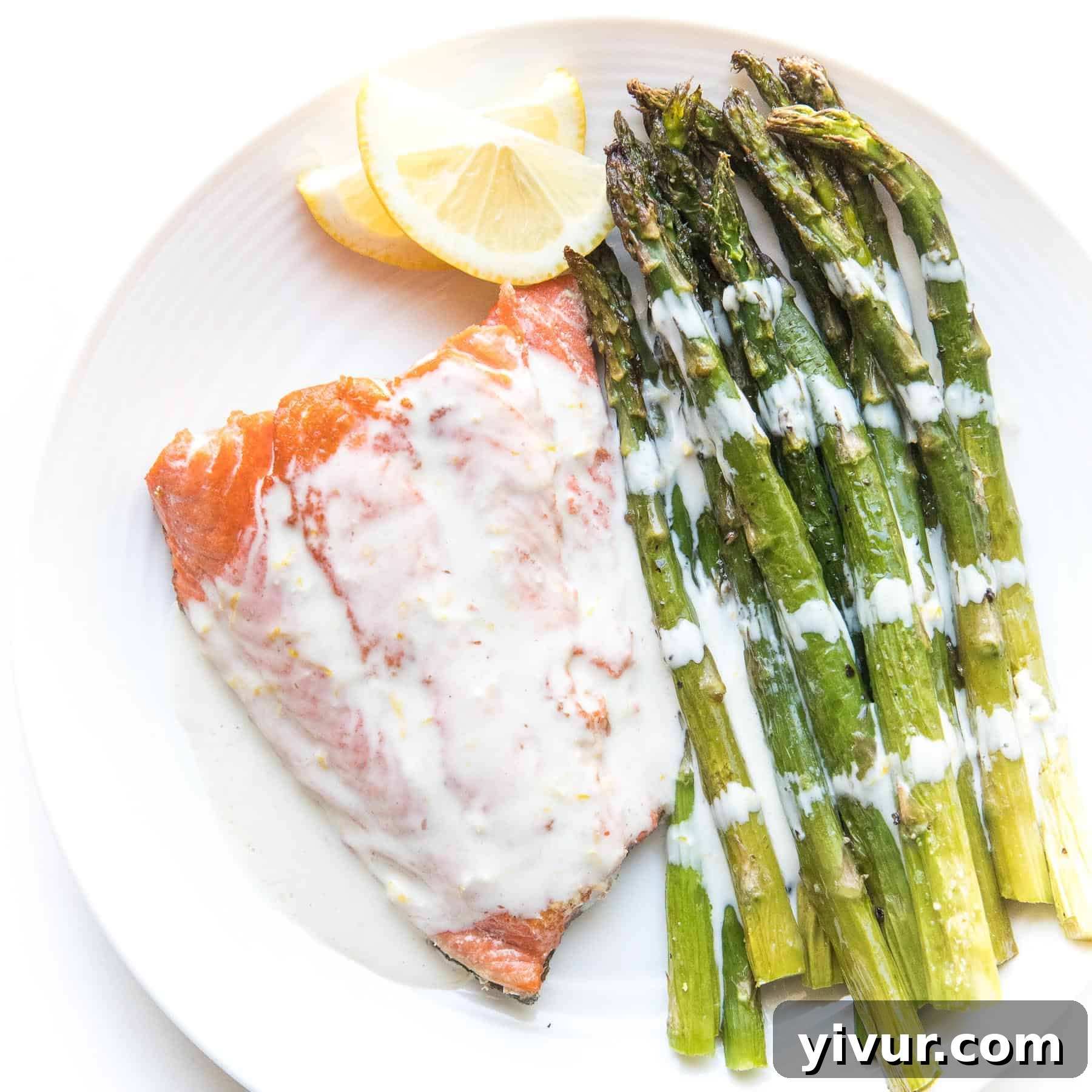
Whole30 & Keto Coconut Tahini Salmon: Your Ultimate Healthy Weeknight Meal
Prepare to transform your dinner routine with our incredible Whole30 + Keto Coconut Tahini Salmon recipe! This dish isn’t just simple and healthy; it’s a flavor powerhouse featuring tender, perfectly cooked salmon crowned with an irresistibly creamy, three-ingredient sauce. It’s a dream come true for anyone following Paleo, Whole30, or Keto diets, being naturally gluten-free, grain-free, dairy-free, sugar-free, and committed to clean, real food principles. Get ready for a meal that will leave you feeling satisfied, nourished, and eager for more, all without compromising on taste or your dietary goals.
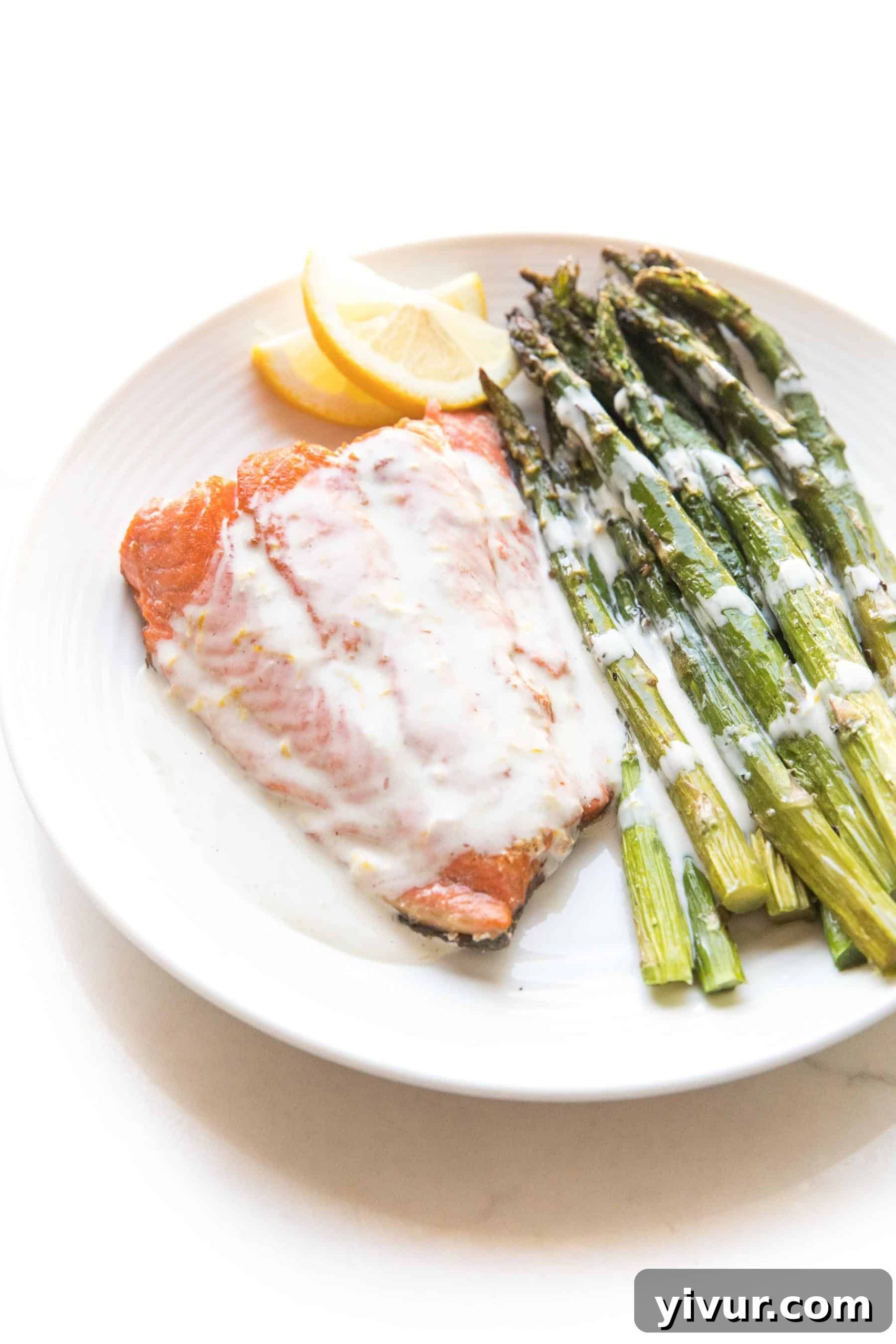
Imagine a sauce so delectable, so rich and vibrant, that you’ll be tempted to savor every last drop. That’s precisely what awaits you with our signature coconut tahini topping. This sauce isn’t merely an accompaniment; it’s the star that elevates a simple salmon fillet into a gourmet experience. Paired with our fool-proof method for baking salmon, this recipe is poised to become your new go-to dinner, proving that healthy eating can be both quick and extraordinarily delicious.
The best part? This entire gourmet meal, from prep to plate, can be ready to enjoy in an astonishing 25 minutes! Perfect for busy weeknights, meal prepping for the week ahead, or whenever you crave a wholesome, satisfying dish without spending hours in the kitchen. It’s truly a testament to the fact that sometimes, the simplest approaches yield the most exceptional outcomes.
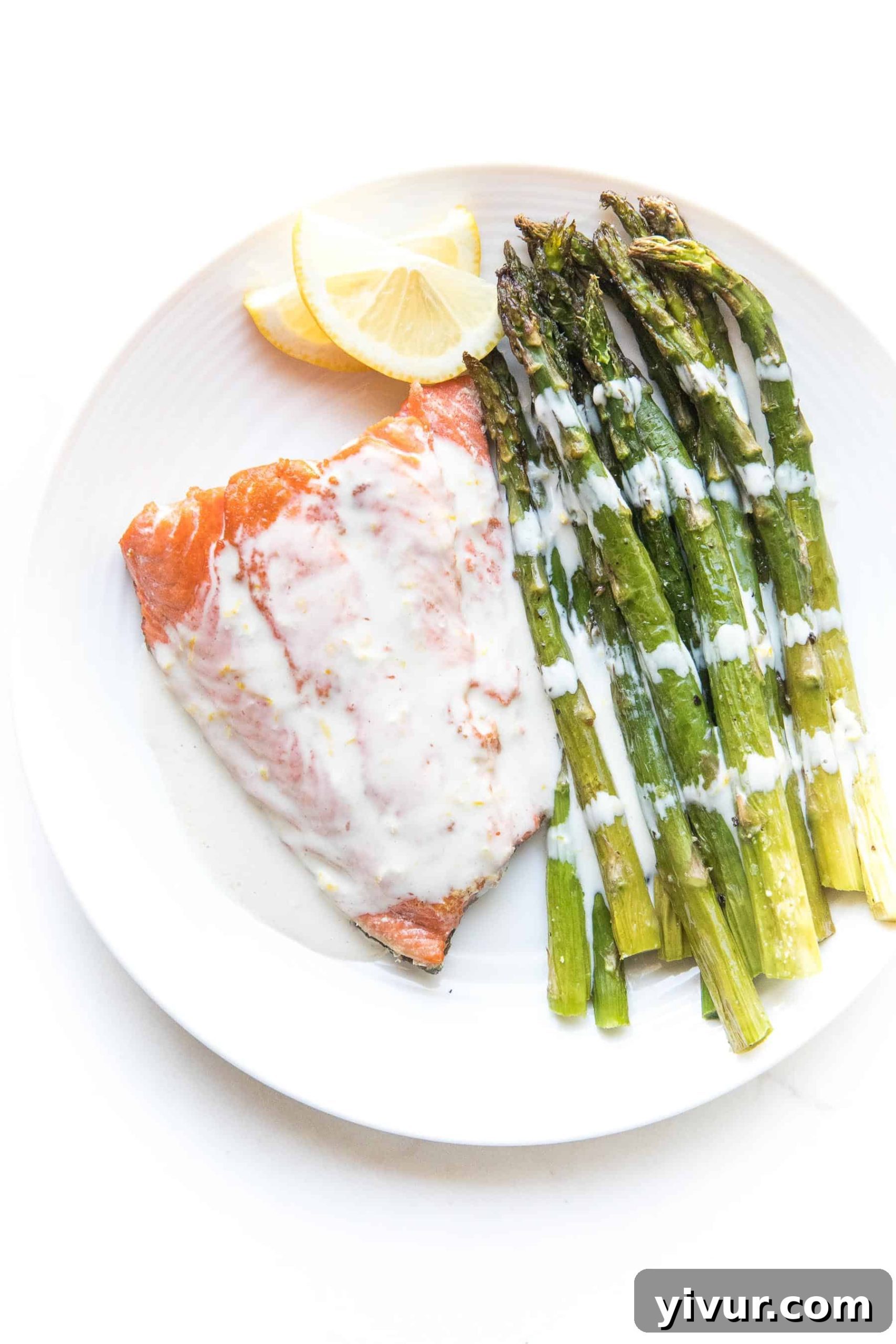
Mastering Perfectly Baked Salmon: The Cold Oven Method
Forget everything you thought you knew about baking salmon. My absolute favorite, and arguably the most reliable, way to achieve perfectly cooked salmon every single time involves starting with a cold oven. This ingenious technique ensures that your salmon cooks gently and evenly, resulting in a flaky, moist texture without any dry spots or overcooked edges. It works beautifully for both skin-on and skin-off fillets, making it incredibly versatile and user-friendly for even the most novice home cooks.
How the Cold Oven Method Works its Magic:
The secret lies in the gradual temperature increase. When you place salmon in a cold oven, the fish slowly comes up to temperature alongside the oven. This gentle cooking process prevents the outer edges from seizing and drying out, which often happens when fish is introduced to a preheated, very hot oven. The result is consistently tender, succulent salmon that’s cooked through evenly from edge to center.
- **Minimal Preparation:** Simply place your salmon fillets, seasoned with salt and pepper, on a lined baking sheet. There’s no need for tedious waiting or preheating.
- **The Cold Start Advantage:** Put the baking sheet, with the salmon and any accompanying vegetables like asparagus, directly into a cold oven. Close the oven door firmly.
- **Set and Forget Simplicity:** Set your oven to 350ºF (175ºC), and then set a kitchen timer for 25 minutes. That’s it! No peeking, no flipping, no fuss.
- **Flawless Finish:** When the timer signals, you’ll be greeted with perfectly cooked salmon that’s moist, flaky, and ready to be drizzled with our irresistible sauce. This method guarantees success, making perfect salmon an achievable reality for everyone.
This technique is a game-changer for anyone intimidated by cooking fish, guaranteeing a succulent result that will impress even the most discerning palates. It simplifies the cooking process, allowing you to focus on other aspects of your meal preparation or simply enjoy a moment of calm before dinner.
The Star of the Show: Our 3-Ingredient Coconut Tahini Sauce
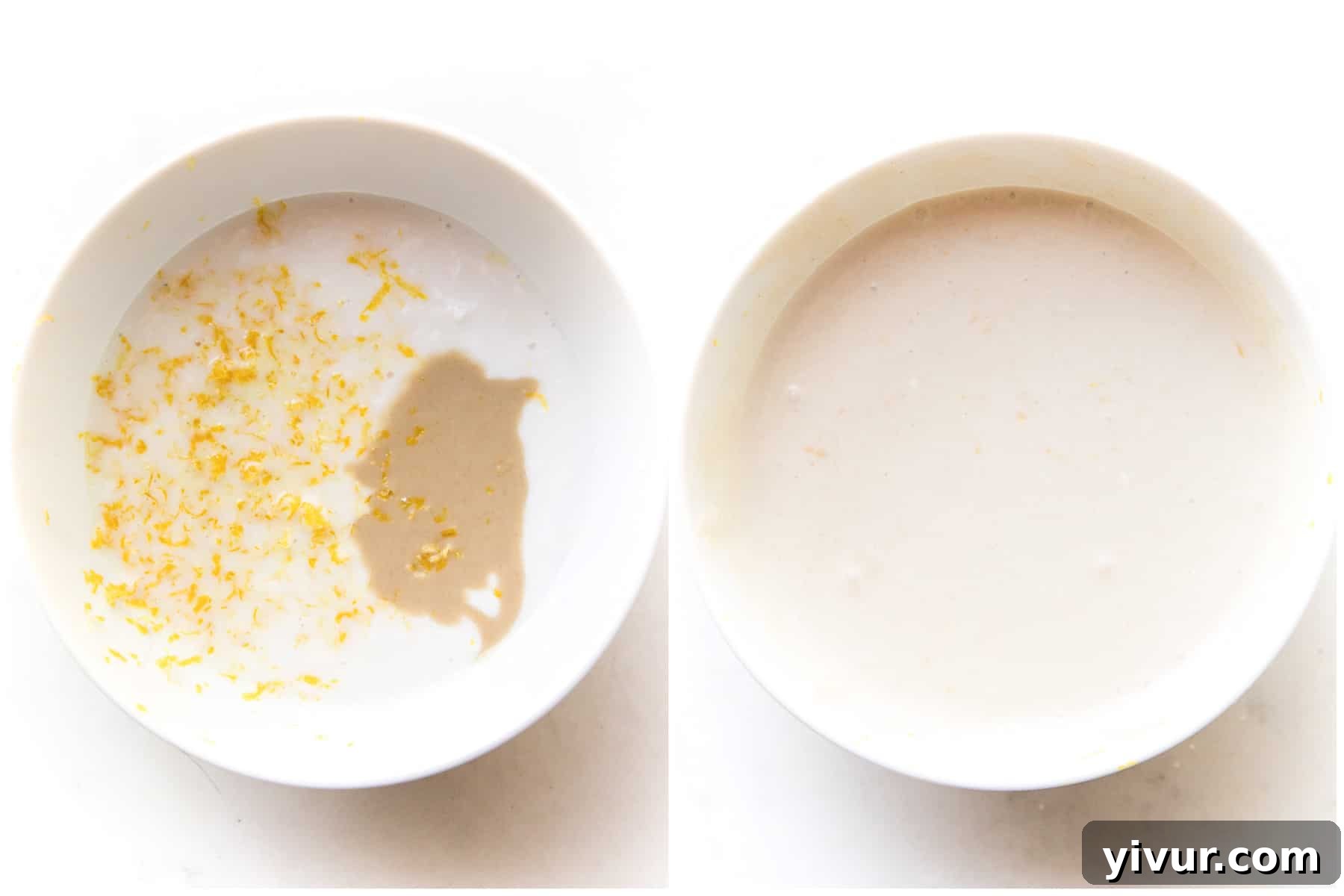
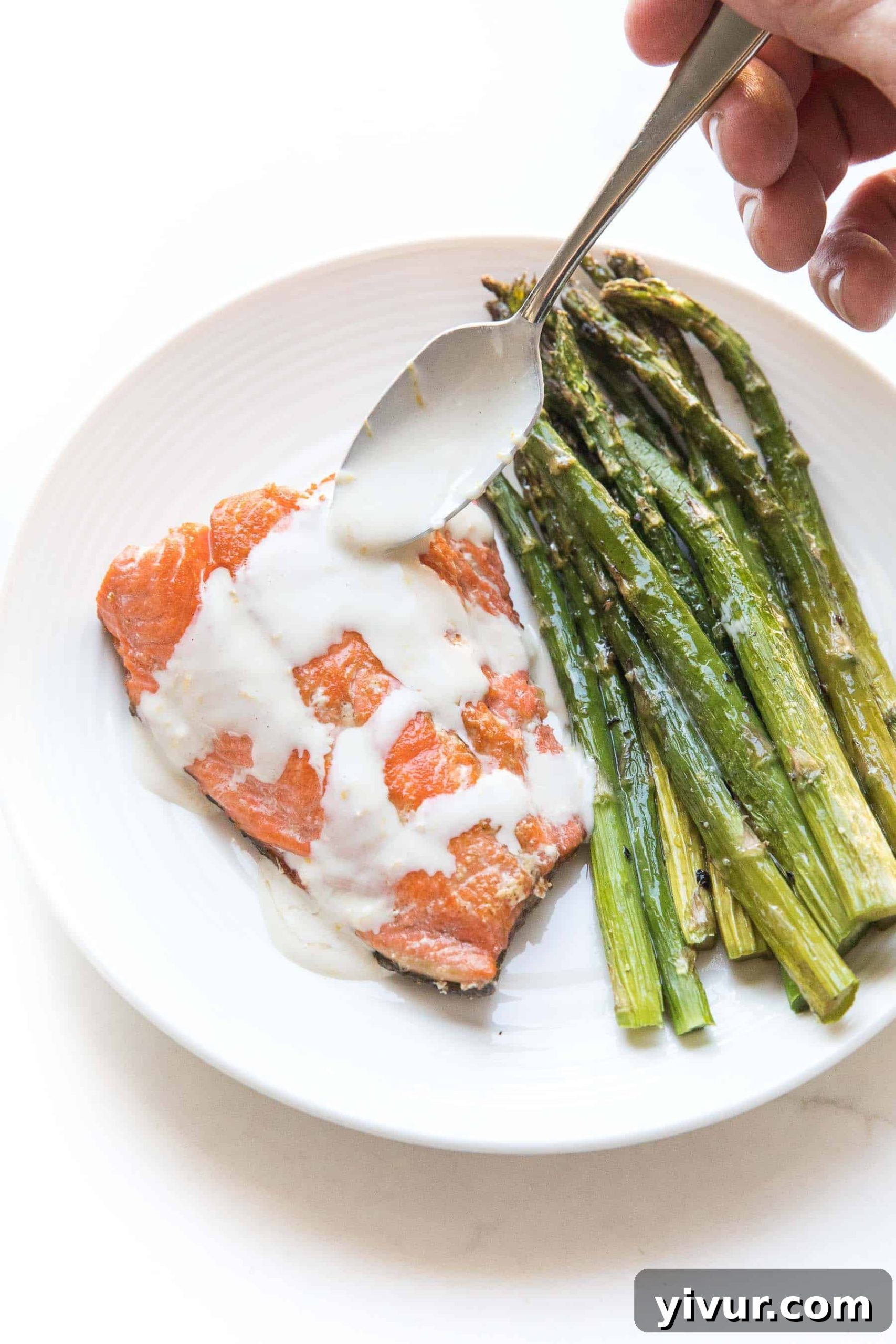
While the salmon is undeniably fantastic, the true showstopper of this meal is undeniably the creamy coconut tahini sauce. Its origin story is as delightful as its taste: born out of a desire to elevate some cold, leftover salmon, I raided my fridge for inspiration. What emerged from a spontaneous combination of canned coconut milk, rich tahini, bright lemon zest, fresh lemon juice, and a pinch of salt was nothing short of culinary magic.
This sauce is a revelation – luscious, silky, and infused with an exquisite tropical tang that perfectly complements the rich flavor of salmon. It beautifully balances the nutty depth from the tahini with the subtle sweetness and unparalleled creaminess of full-fat coconut milk, all uplifted by the zesty, vibrant brightness of fresh lemon. The combination creates a complex yet harmonious flavor profile that is both comforting and exotic.
The best part? You don’t even need to heat it up! A simple drizzle of this room-temperature sauce over your warm, flaky salmon is all it takes to transform your meal into an unforgettable dining experience. It adds a layer of luxurious texture and a burst of fresh flavor that truly makes this dish sing. This sauce is also incredibly versatile, and you might find yourself wanting to put it on everything!
Nutritional Powerhouse & Dietary Compliance
Beyond its incredible flavor, this coconut tahini sauce is a powerhouse of healthy fats, making it an ideal choice for those following a Keto lifestyle. The monounsaturated fats from tahini and the medium-chain triglycerides (MCTs) from coconut milk not only enhance satiety, helping to curb hunger and keep you feeling full longer, but also provide sustained energy. This is particularly beneficial when adhering to a Whole30 program, where nutrient density and satiety are key for successful adherence.
This recipe is a fantastic way to enjoy nutrient-dense, real food that actively supports your health goals without sacrificing an ounce of taste. Salmon itself is a rich source of omega-3 fatty acids, crucial for heart health and brain function, as well as high-quality protein. When combined with fiber-rich asparagus, you get a complete meal that fuels your body and delights your palate.
We love serving this vibrant salmon and sauce combination with some perfectly roasted asparagus and a side of fluffy cauliflower rice. This creates a complete, balanced, and deeply satisfying meal that aligns perfectly with Whole30 and Keto principles, offering abundant micronutrients and macronutrients in a delicious package.
Why This Recipe is a Must-Try for Whole30 & Keto Lifestyles
Both Whole30 and Keto diets emphasize nutrient-dense, whole foods while eliminating processed ingredients and sugars. This Coconut Tahini Salmon fits seamlessly into both frameworks, making it an excellent choice for anyone committed to these healthy eating patterns:
- **Whole30 Compliance:** The recipe meticulously uses only real, unprocessed ingredients – wild salmon, fresh asparagus, olive oil, pure tahini, full-fat canned coconut milk, fresh lemon, and simple salt and pepper. It is naturally free from grains, legumes, dairy, soy, and any added sugars or artificial additives, making it 100% compliant with Whole30 rules.
- **Keto-Friendly:** Salmon is a phenomenal source of healthy fats and high-quality protein, with virtually no carbohydrates. Tahini and coconut milk further contribute healthy fats, keeping the net carbohydrate count exceptionally low. This makes it an excellent choice for maintaining ketosis, promoting fat-burning, and supporting a low-carb, high-fat diet.
- **Paleo Perfection:** For those on a Paleo journey, this recipe offers a delicious, ancestral-diet-friendly meal packed with lean protein, beneficial fats, and fresh, vibrant vegetables, all in their most natural state.
- **Clean Eating & Real Food:** Beyond specific diets, this dish champions the principles of clean eating by focusing on wholesome, unadulterated ingredients. It’s about nourishing your body with what it truly needs, prepared in a simple yet incredibly flavorful way.
This dish is not just about adhering to dietary rules; it’s about enjoying incredibly delicious food that makes you feel amazing inside and out. It’s proof that healthy eating can be exciting, satisfying, and bursting with flavor.
Watch Coconut Tahini Salmon Recipe Demo (2:11 minutes)
Whole30 + Keto Coconut Tahini Salmon Recipe
This Keto Coconut Tahini Salmon Recipe is simple, healthy, and features perfectly cooked salmon topped with a creamy 3-ingredient sauce. Enjoy a flavorful meal that fits your Whole30, Keto, and Paleo lifestyle.
Recipe Details:
- Yields: 4 Servings
- Prep Time: 5 minutes
- Cook Time: 20-25 minutes (depending on salmon thickness)
- Total Time: Approximately 25-30 minutes
- Cuisine: American
- Course: Main Course
- Author: Natalie
Ingredients
For the Salmon & Asparagus:
- 4 (6-ounce) wild salmon fillets
- 1 pound fresh asparagus, tough ends trimmed off
- 1 tablespoon olive oil (or avocado oil)
- 1 teaspoon sea salt and freshly ground black pepper, to taste
For the Creamy Coconut Tahini Sauce:
- ¼ cup organic tahini
- ¼ cup full-fat organic canned coconut milk (ensure it’s the thick cream, not light milk)
- Zest from 1 whole lemon
- Juice from half a fresh lemon (about 1 tablespoon)
- ½ teaspoon sea salt
Equipment Needed
- Rimmed baking sheet
- Parchment paper (highly recommended for easy cleanup)
- Small mixing bowl
- Whisk or fork
Instructions
- **Prepare Salmon:** Gently pat the salmon fillets thoroughly dry with a paper towel. This crucial step helps achieve a crisper exterior and prevents steaming. Season generously with sea salt and freshly ground black pepper on both sides.
- **Arrange on Baking Sheet:** Line a rimmed baking sheet with parchment paper for effortless cleanup. Arrange the seasoned salmon fillets and the trimmed asparagus evenly on the baking sheet, ensuring they are in a single layer without overcrowding. Drizzle both the salmon and asparagus with olive oil, then season again lightly with salt and pepper.
- **Cold Oven Baking Method:** Place the rimmed baking sheet into a COLD, unheated oven. Close the oven door. Set your oven temperature to 350ºF (175ºC), and immediately set a kitchen timer for 25 minutes. There is no need for preheating! The salmon and asparagus will cook perfectly as the oven heats up, resulting in incredibly moist fish and tender-crisp vegetables.
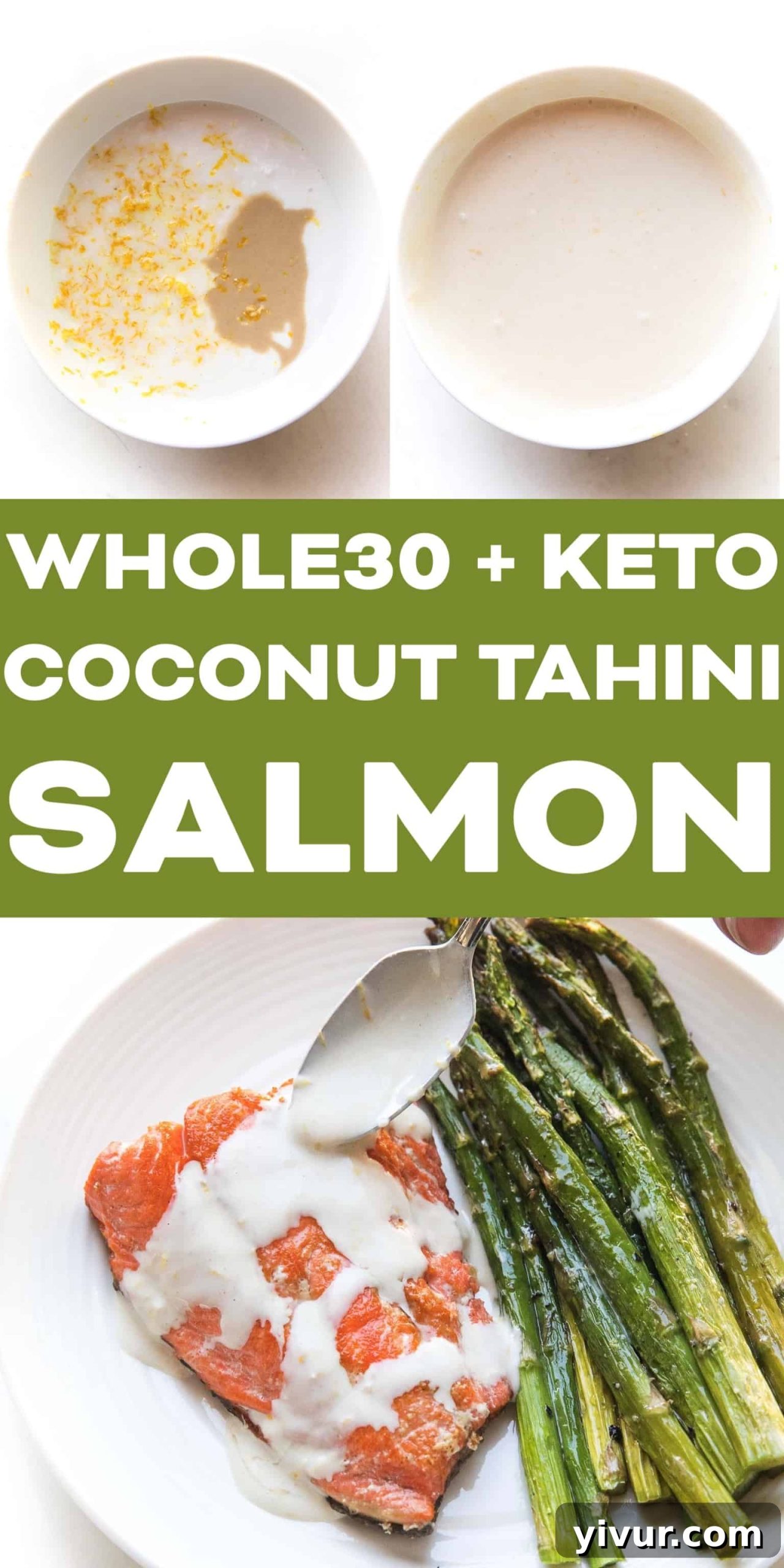
- **Prepare Coconut Tahini Sauce:** While the salmon is baking, prepare the magical coconut tahini sauce. In a small mixing bowl, combine the tahini, full-fat canned coconut milk, fresh lemon juice, vibrant lemon zest, and ½ teaspoon of sea salt. Whisk or stir vigorously until the sauce is completely smooth and creamy. It might appear thick at first, but keep stirring; it will emulsify into a luscious, pourable consistency.
- **Serve:** Once the oven timer goes off, carefully remove the baking sheet from the oven. The salmon should be beautifully flaky and cooked through (internal temperature of 145ºF/63ºC), and the asparagus tender-crisp with a slight char. Transfer each salmon fillet to a plate alongside the roasted asparagus. Drizzle generously with about 2 tablespoons of the delightful coconut tahini sauce over each salmon fillet. Serve warm and enjoy! This dish pairs wonderfully with a side of cauliflower rice for a complete and healthy meal.
- **Storage:** Any leftover salmon and sauce can be stored separately in airtight containers in the refrigerator for up to 3-5 days. The sauce may thicken significantly in the fridge; simply stir well before serving. You can add a tiny bit of water or more lemon juice if you prefer a thinner consistency.
Notes & Customization Tips:
- **Salmon Substitutions:** Don’t have salmon or want to try something new? This recipe is incredibly versatile! Any other firm white fish or seafood would work wonderfully, such as mahi-mahi, halibut, cod, swordfish, or even large shrimp or scallops. Adjust cooking time based on the thickness of the fish; thinner fillets will cook faster.
- **Tahini Alternatives:** If tahini isn’t your preference or you don’t have it on hand, you could experiment with other nut butters like unsweetened cashew butter or almond butter for a similar creamy consistency and rich flavor. Always check labels for added sugars or non-compliant ingredients if following Whole30.
- **Coconut Milk Options:** While full-fat canned coconut milk (the thick cream, not the thin beverage kind) provides the best richness and flavor, other non-dairy milks like unsweetened cashew milk or almond milk can be used. Just be aware the sauce might be thinner and less rich. For extra dairy-free creaminess without coconut, try a homemade cashew cream!
- **Citrus Swap:** Lemon provides a fantastic bright, tangy contrast to the rich sauce, but feel free to get creative with other citrus! Orange, lime, or even grapefruit zest and juice can offer interesting and equally delicious flavor variations.
- **Vegetable Variations:** Asparagus is fantastic, but nearly any vegetable can be roasted alongside the salmon. Broccoli florets, bell peppers, zucchini slices, green beans, or Brussels sprouts are all excellent choices. If using frozen vegetables, consider roasting them on a separate baking sheet to avoid excess moisture on the salmon, which could prevent proper browning.
- **Oil Choices:** Olive oil is a great choice, but avocado oil is another excellent neutral-flavored, high smoke point option. Melted coconut oil or melted ghee (if not strictly dairy-free for Whole30 compliance) can also be used.
- **Spice It Up:** For a subtle kick, add a pinch of red pepper flakes to the sauce or a dash of cayenne pepper to the salmon seasoning before baking. A sprinkle of fresh cilantro or parsley over the finished dish also adds a lovely fresh note.
Watch the Recipe Video for Visual Guidance:
Nutrition Information (per serving, approximate):
- Calories: 529 kcal
- Total Carbohydrates: 4.7g
- Protein: 68.5g
- Total Fat: 27.4g
- Dietary Fiber: 1.9g
- Net Carbohydrates: 3g
Note: Nutritional values are estimates and may vary based on specific ingredients, portion sizes, and preparation methods. Please use these values as a general guide.
Did you make this delicious recipe?
We’d absolutely love to hear about your experience! Please take a moment to leave a comment and give this recipe a rating below. Your valuable feedback helps other home cooks discover and enjoy this fantastic, healthy meal!
Whole30 + Keto Coconut Tahini Salmon: Frequently Asked Questions (FAQ)
We’ve gathered some common questions to help you get the most out of this delightful recipe and ensure your culinary success:
Q: What does tahini taste like? Can you describe it to someone who has never tried it?
A: Tahini is essentially a paste made from finely ground sesame seeds. Imagine the consistency of a thin, runny peanut butter, but with a unique flavor profile. It has a distinct, earthy, slightly nutty taste with a hint of bitterness. This bitterness is usually mellowed out when tahini is combined with other ingredients, as it is in our sauce. It’s incredibly rich and creamy, a staple in Mediterranean and Middle Eastern cuisines, and famously provides the characteristic depth and silkiness in classic hummus. In this sauce, it lends a wonderful complexity that pairs beautifully with the coconut and lemon.
Q: Can I cook the salmon on a sheet pan instead of a skillet, or at a different oven temperature?
A: Absolutely! The sheet pan method is actually our highly recommended technique for this recipe, leveraging the “cold oven” approach for perfect results. Our instructions detail using a rimmed baking sheet. If you prefer a slightly higher temperature for a crispier exterior on your salmon and vegetables, you can certainly adapt. Place the fillets on a baking sheet in a cold oven, then turn the oven on to 400ºF (200ºC) and cook for approximately 20 minutes. Both the 350ºF for 25 minutes and 400ºF for 20 minutes “cold oven” methods will yield beautifully cooked salmon every time, so feel free to choose what suits your taste and oven best.
Q: Is the sauce heavily flavored with coconut? I’m not always a huge fan of overwhelming coconut taste.
A: Yes, if you’re a true coconut lover, this sauce is definitely for you! The full-fat canned coconut milk provides a prominent creamy coconut flavor that is beautifully balanced by the nutty tahini and bright lemon. It definitely leans into the tropical notes, making it unique and incredibly delicious. If you prefer a milder coconut presence, you can try reducing the coconut milk slightly and increasing the tahini, or experimenting with a brand of coconut milk that you find to have a less intense flavor. The lemon and tahini do a good job of cutting through and complementing the coconut, creating a harmonious blend.
Q: Can I use almond milk instead of canned coconut milk in the sauce for a less coconut-y flavor?
A: While you *can* use almond milk, be aware that it might result in a significantly thinner sauce. Full-fat canned coconut milk provides the essential richness and creamy body that almond milk, with its much lower fat content, cannot replicate. The sauce’s luscious texture is largely due to the higher fat content of canned coconut milk. If you opt for almond milk, you might need to adjust the quantities of tahini or lemon juice to achieve a desirable consistency and flavor balance, or you might find the sauce too watery. For a similarly creamy, non-coconut, and dairy-free option, I would highly recommend trying my homemade cashew cream recipe as a substitute; it offers a rich, velvety texture without the coconut flavor!
Q: Can I use this amazing sauce on other types of fish or even chicken/pork?
A: One hundred percent yes! This coconut tahini sauce is incredibly versatile and quickly becomes a household favorite. It would be absolutely delicious on virtually any type of seafood – think flaky cod, delicate halibut, robust swordfish, or even grilled shrimp and seared scallops. Don’t limit it to fish, though! It also makes a fantastic, flavorful dressing or marinade for grilled chicken breasts, pan-seared pork chops, or even drizzled generously over a medley of roasted vegetables for an extra layer of gourmet flavor. Feel empowered to get creative and enjoy its unique, creamy taste on all your favorite proteins and veggies!
This post contains affiliate links. We genuinely appreciate your support when you choose to purchase through these links, as it helps us continue to create valuable content!